- Week 17 (A) |
- Unify |
- Payments

King James I Academy
Learning to Inspire
Learning to Succeed
Learning to Develop
Learning to Excel
Learning to Respect
Learning to Appreciate
Learning to Share
Learning to Challenge
- Week 17 (A) |
- Unify |
- Payments

Citizenship
 Through the study of Citizenship, students are taught knowledge in relationship to politics, parliament, power and the law, as well as human rights, justice, equality, finance and the economy, communities and the UK’S role in the wider world. Lessons are sequenced and mapped to the national curriculum to build knowledge over time. Students learn to think critically about complex issues, evaluate sources, weigh evidence, problem solve, take part in debates, advocate their viewpoint, sustain arguments, and take forward democratic action on issues and matters of concern.
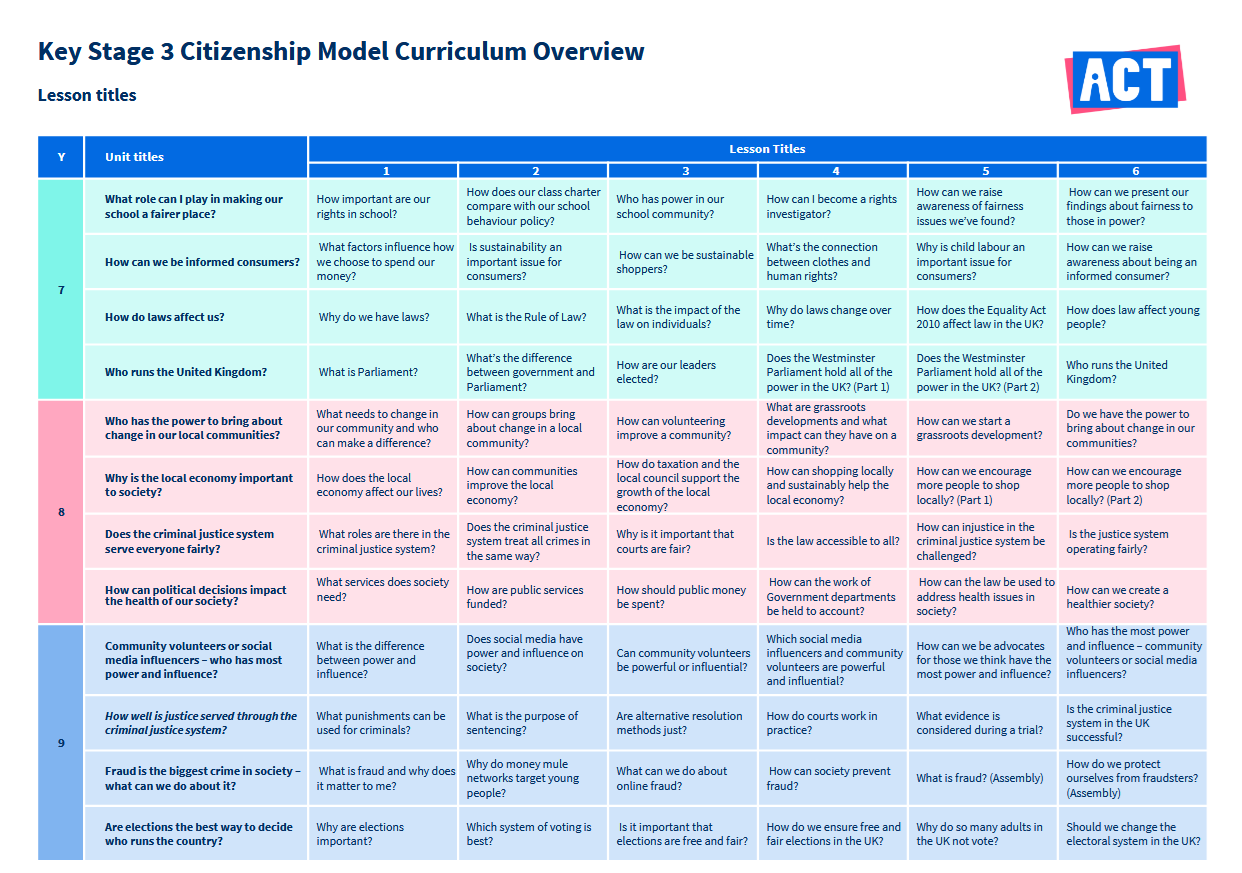
KS3
National Curriculum Citizenship teaching requirements:
Subject content
- The development of the political system of democratic government in the United Kingdom, including the roles of citizens, Parliament and the Monarch.
- The operation of Parliament, including voting and elections, and the role of political parties.
- The precious liberties enjoyed by the citizens of the United Kingdom
- The nature of rules and laws and the justice system, including the role of the police and the operation of courts and tribunals.
- The roles played by public institutions and voluntary groups in society, and the ways in which citizens work together to improve their communities.
- The functions and uses of money, the importance and practice of budgeting, and managing risk.
National Curriculum Citizenship teaching requirements:
Skills
- Research, interrogate and weigh up evidence
- Debate and evaluate viewpoints
- Present reasoned arguments
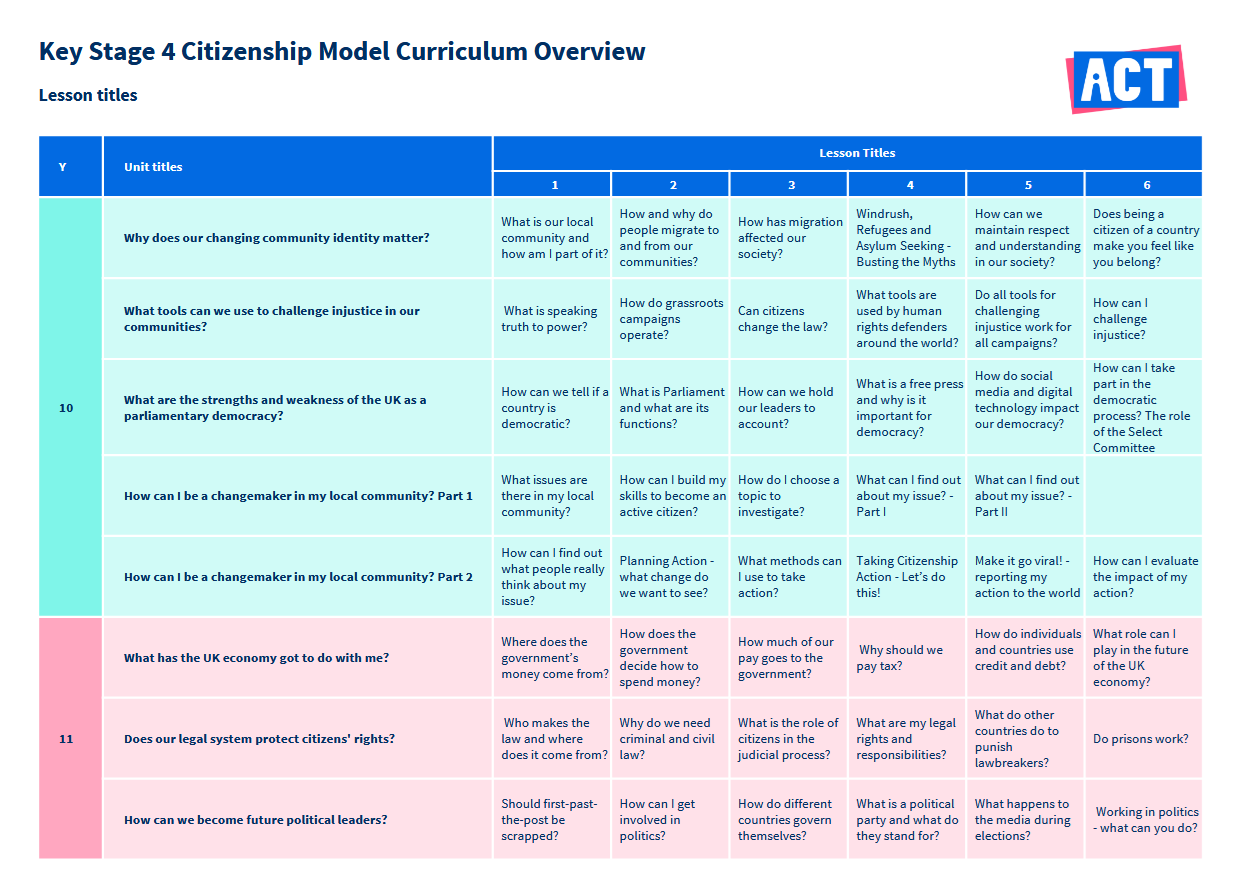
KS4
National Curriculum Citizenship teaching requirements:
Subject content
- Parliamentary democracy and the key elements of the constitution of the United Kingdom, including the power of government, the role of citizens and Parliament in holding those in power to account, and the different roles of the executive, legislature and judiciary and a free press
- The different electoral systems used in and beyond the United Kingdom and actions citizens can take in democratic and electoral processes to influence decisions locally, nationally and beyond
- Other systems and forms of government, both democratic and non-democratic, beyond the United Kingdom
- Local, regional and international governance and the United Kingdom’s relations with the rest of Europe, the Commonwealth, the United Nations and the wider world
- Human rights and international law
- The legal system in the UK, different sources of law and how the law helps society deal with complex problems
- Diverse national, regional, religious and ethnic identities in the United Kingdom and the need for mutual respect and understanding
- The different ways in which a citizen can contribute to the improvement of his or her community, to include the opportunity to participate actively in community volunteering, as well as other forms of responsible activity
- Income and expenditure, credit and debt, insurance, savings and pensions, financial products and services, and how public money is raised and spent.
National Curriculum Citizenship teaching requirements:
Skills
- Use a range of research strategies
- Weigh up evidence
- Make persuasive arguments
- Substantiate their conclusions
- Active citizenship

Social Media: